Sunday, May 12, 2013

Guest Blog on Texas Teacher Round-up

If you are a Texas teacher, you MUST get over to Texas Teacher Round-up.  Lorraine from 4th Grade Froggies and I set this up recently.  We list all of the TEKS for each grade level and link all of the best blog posts and resources from teachers for each of the TEKS.  I know I'm biased, but I think it will make planning a breeze!
I wrote the first real "guest" post over there and it's about science.  Surprise!  My team and I did an awesome bulletin board project for animal adaptations and I would love for you to check it out.


Saturday, May 11, 2013

Skittles and the Scientific Method

I started thinking about science for next year.  I used my Introductions to Science Stations last year to start off the year, but I wanted to add a little something to that.  At the beginning of the year, I want a simple, fun experiment to walk my students through the scientific method and discuss important terms and processes along the way.  This is where Skittles come in!

For the great Skittles experiment, I was trying to answer the question: Do Skittles dissolve faster in warm or cool water?  I measured out some water, heated up water for one cup, and got out my Skittles.  Then, I ate a Skittle, but it's okay.  :)
 I dropped them in at the same time and started stirring evenly with both hands after setting my timer.
 After about 3 minutes, the Skittle in the warm water had dissolved.  The Skittle in room temperature water took about 5 minutes.  You can repeat with two more trials for added reliability.
This is a simple experiment to do with your class for the beginning of the year or any time.

The Skittles experiment, along with suggestions, and printables is available in my iLearn Science pack.  There is a PowerPoint, 8 stations, 2 activities, the Skittles experiment, and a lot of guidance on how to get a great start in science those first few weeks of school.


Sunday, April 28, 2013

Landforms Fold-Ups

This is the first time I had a product pretty much complete then totally forgot about it.  I made this about a month ago, but didn't find it until I was organizing my files this morning.  It's a shame I forgot about it because I love it!  
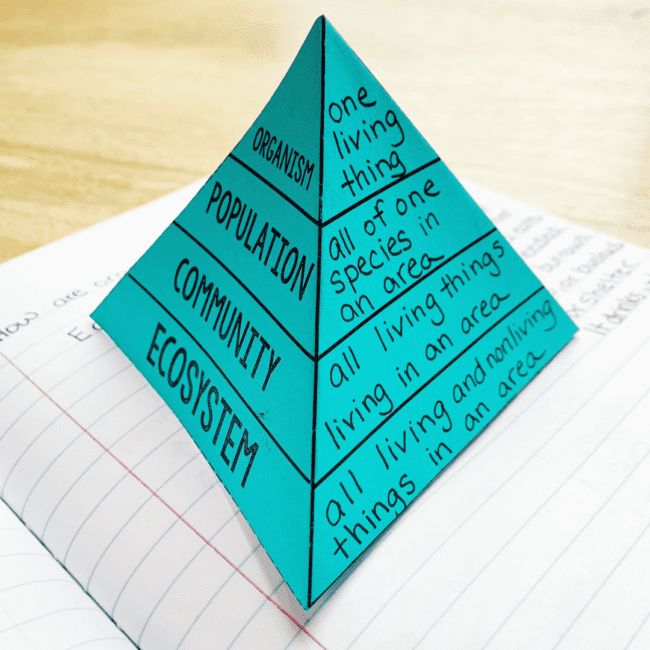
This landforms unit includes 9 posters, 9 fold-ups, a 2-page informational text, 2 landforms, and information charts.
Fold-Ups sample
 These work great for science notebooks, lapbooks, or posters.
Preview
Click the pic to check it out in my TpT Store.

Thursday, April 25, 2013

Science Stations Webcast Ready!

Hello, friends!  I get a lot of questions about stations, so I asked on Facebook about who might be interested in some professional development on science stations and got an overwhelming response.  So, I put together this 14 minute webcast for you.

I really want to guide you through the process of putting together science stations for YOUR students.  The end of the year is a great time to try out new things you may be considering for next year AND review previously taught concepts!

Here are some things you may want to have on hand:
a class list
paper
fancy pen

I tried to not have an information overload...I may have failed.

If you have any feedback, questions, or comments, please leave a comment for me here.

Tuesday, April 23, 2013

Sunday, April 14, 2013

Science and Literacy: ICE, the new KWL

Here's another fantastic idea from a workshop with Terri  Sessoms about how to address writing arguments in science.  It's similar to a KWL, but evidence-based, which we really need to consider as we focus more and more on text evidence and measurable or observational evidence from real-life experiences.

The graphic below is based on an example she gave us.  My understanding is that ideas can be generated from the text.  The claim is what is found in the text.  The evidence is the result of an investigation and text evidence.
Here's my thinking for implementing this.

1. Think of what science standard you want students to learn.
2. Find a short information text on the topic, a trade book or reading passage.
3. Help students arrive at the idea you want to discuss and what claims are expressed in the text.
4. Design and conduct an experiment or investigation to gather real-life evidence.

It's simple and perfect!

Saturday, April 13, 2013

Science and Literacy: Savings and Loan Strategy

A shift has occurred in education once again...this time with connecting science and literacy.  Fear not!  I'm starting a series of blog posts with simple, effective strategies to help you and your students make the connection.  :)

Terri Sessoms, a presenter at NSTA, showed us a fantastic strategy to help students learn from informational science text called Savings and Loan.  I'm so thankful she agreed to let me share it with you all.  Your students will be reading, writing, speaking, AND listening using this simple strategy!
For this example, I chose 6 simple pages from a book titled Organisms.  The pages were about the life cycle of a plant.  Below shows how you can use the strategy.
But wait!  That's not the end!  A couple of days later, have students write that synthesizing sentence at the top of the page in their science notebooks.  Then, the other 6 ideas become their own sentence that can be expanded on and added to, once again reinforcing the important information.  Then, students can add a closing sentence that connects the information again.
Pin It button on image hover